Entheogen is a Greek derived word that means "generating the divine
within." An entheogen, therefore, is a psychoactive substance that is
used in a religious, spiritual or shamanic context. Traditional Witches
have used entheogens of several types for centuries, as recorded in the
lore of mythology, in the records of the trials and persecutions, and in
the regional indigenous shamanic practices that have been assimilated
into the Craft various locales.
Among the most commonly used and widely known entheogens in European and
American Witchcraft practice are Sabbat Wine and Flying Ointment. These
are the two on which we'll focus our attentions in this exploration.
(While there are many and varied regional entheogens that have found
their way into Craft practice in some form or another, they are just too
numerous for me to mention here. Furthermore, I really don't feel
qualified to speak on them since I'm very inexperienced with them.)
Sabbat Wine
Wine, just as it is, constitutes a powerful entheogen. The Dying and
Resurrected God is embodied int he wine in the form of Dionysos -- and
in Jesus, for that matter, whose symbolism and mythology associates him
with the wine. Dionysos, though, is the "Twice Born" God of the Vine,
and his cup is the offering of ecstasy and madness. "I am the vine," he
says, and he offers insight into death and rebirth, despair and joy.
Many Witches drink wine -- either a little or a lot -- as a part of
their Sabbat rites no matter what. In American Folkloric Witchcraft, we
include Sabbat Wine for two separate and distinct purposes -- and the
wine is different depending on that purpose.
If we are celebrating the Housle as we usually do within the regular
course of ritual, we will sacrifice a cup of red wine. It is the shed
blood of the Red Meal that is the Housle. In this instance, we don't
add anything to the wine because we don't need any additional
entheogenic effect.
If, however, we are doing trance work, flying out, seiding, or otherwise
seeking an altered state of consciousness, we might prepare our special
Sabbat Wine (vinum sabbati). We also prepare this Sabbat Wine for
initiations. In our case, the vinum sabbati is a local sweet red wine
(Oliver Soft Red) in which mugwort and lemongrass have been mulled.
After straining the herbs, we add local honey to sweeten the mix and cut
the bitterness of the mugwort. Both mugwort and lemongrass have gentle
psychoactive properties.
It's interesting to note that the term "vinum sabbati" has actually been
associated with flying ointment, or the witches' salve, which is the
other major entheogen of witchcraft. In fact, Nigel Jackson said flying
ointment was "the black wine of owls."
Flying Ointment
This greasy, trance-inducing substance was traditionally made of
hallucinogenic (and often fatal) herbs that had been boiled in pig fat
and then strained. It was called "green salve" or "witches' ointment"
and it some of the stock ingredients (solinicaeds) caused a "flying"
sensation as the hallucination began -- hence the popular image of the
flying witch.
Great care had to be taken in preparing this ointment, though.
Traditional ingredients included such components as henbane, monkshood,
deadly nightshade, belladonna, hemlock, and mandrake -- all lethal in
too large a dose. In some cases, that does could be quite small. One
witch learned from another how to properly prepare the salve and how to
administer it to herself, and I'm sure it was still "At your own risk,
sister."
I'm simply not a brave enough woman to fool around with these poisons.
So, I looked to some of the other traditional ingredients in the old
flying ointments -- the ingredients that wouldn't cause a person to
exsanguinate from their skin, for example. (Belladonna does that. It's
the key ingredient in rat poison.) Cinquefoil and Balm of Gilead made
the cut from the old recipes. Then, I gathered together herbs known for
trance and vision work -- many of which I'd already used successfully.
Mugwort, Dittany of Crete, lemongrass, clary sage, wormwood, rue.
I use vegetable shortening as the fat, and I add benzoin powder and
vitamin E for preservation. None of the last is traditional in any way,
but I want it to last and not get funky.
Our coven uses this mix a fair amount. We fly out at just about every
Sabbat. Does my blend make you trip? No. Does it help you fly? Oh yeah.
Everybody whose used it add reported back has shared positive results.
At this point, that's been a fair few people, since we do sell this in
our Etsy shop.
Monday, June 25, 2012
Saturday, June 16, 2012
Castle of Stone
![]() |
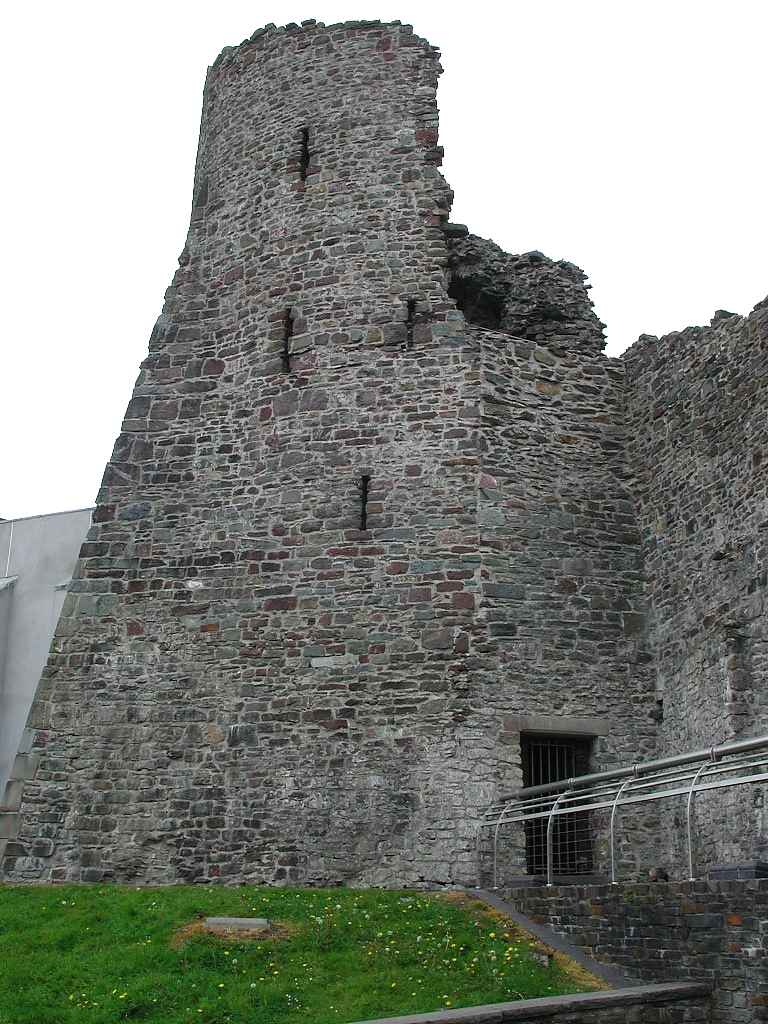
| Castell Dinas Bran |
Mont & Bailey
Top open to the sky
Seige-place
Warriors' Fort (training, defense, offense, strategy)
Hillfort (castillo)
Not a place of luxury
Guarded by legged creatures (crawlers, walkers)
Home of Cernunnos
Summer Solstice
Noon
Mysteries of Rebirth
The castles of our system are based on Grail Lore, but they also have representations in the none world. These castles are symbolic of the energies inherent in their names and attributed to them by myth and legend. In the Arthurian cycle, the knights journey to seven castles, but most mythographers interpret this imram as an Otherworldly voyage, akin to the shaman's journey into the soul, using the World Tree as a ladder. Robert Graves, in The White Goddess, indicates that each of the seven castles is synonymous with the Spiral Castle, Caer Sidhe (or Caer Arianrhod).
Graves' interpretation makes good sense to us. Each of the castles is so intimately connected in symbolism and meaning, and it is impossible to separate any one of them from gestalt of Caer Sidhe. It is based on this concept that, while we talk about the castles as separate places, we ultimately view them each as a tower or turret on the great Spiral Castle.
The Castle of Stone is the home of Cernunnos, in our system. He is the keeper of the castle and the guardian of its treasure, the Stone Bowl. Cernunnos is honored at Summer Solstice as the Oak King, and the totems present in his time of honor are the Oak, Stag, and Robin.
One of the names of the Castle of Stone is the "4-cornered castle," in Welsh Caer Bannawg. This name became Carbonic or Carbonak later. Graves suggests that this castle is in fact a burial place like a kristvaen (which is formed from four stone slabs that make a stone box). It has also been suggested that "4-cornered" refers to the castle rotating four times, which certainly ties it symbolically to the Spiral Castle.
Carbonak is an important locale in Grail myth, as it is the home of Elaine (the Grail Maiden, wife of Lancelot, and mother of Galahad). It is here that the Grail is revealed in the saga, when Elaine shows it to Lancelot.
![]() |
| Carmarthen -- a 4-cornered castle |
Carbonak is also heavily associated with ravens and with Bran the Blessed. Corbin, which the castle is called in certain parts of the myth, is the Old French word for "raven." Bran means raven in Welsh and Cornish. An extent hill-fort in Penwith, Cornwall is associated with Carbonak, and it is called Caer Bran. The Brythonic possessive version of this name is Kernowek. Castell Dinas Bran ("Castle of the City of Crows") in Wales is assumed by scholars to be the most likely site of Carbonak, however. Bran is inescapably tied to the Grail mythologies in the sense that he, too, went on a voyage in search of a sacred vessel, The Cauldron of Rebirth. Like the Grail-King, he was pierced by a spear and the land suffered until he was healed. Bran is honored and remembered in the Arthurian cycle as Brons, one of Arthur's knights, the son-in-law of Joseph of Arimehtea (who, of course, is said to have brought the grail -- as cup of Christ -- into Celtic lands).
The Stone Castle is no palace, no place of luxury or entertainment. It is a fortress, a place of training and of siege. It is the Vault of the Mysteries. It is a place of safety, and it is a storehouse. It is a seat of power and is built at a site of strength (or one with protective needs).
Several castles and forts spring to mind when envisioning Caer Bannawg for oneself. The Krak de Chevaliers, for instance, is a wonderful example of a medieval fortress. It is a "Mont & Bailey" castle, and it is practically impenetrable. It is functional and foreboding, and it takes very little manpower to defend it.
Cliffords Tower (in York), the Alamo (San Anotnio, TX), and the Castillo del San Marcos (St. Augustine, FL) are all great examples of the Stone Castle.
![]() | |
| Krak de Chevaliers |
Labels:
castle of stone,
Cernnunos,
oak,
oak king,
robin,
stag,
stone bowl
Sunday, June 3, 2012
Tis June!
Friends, we have made it though one round of the Compass together on this blog! It is festival season here for Laurelei and I and that means that we might not be posting as much as usual for a while. It also means that Blade and Broom Botanica will be on the road, and our online store will be taking a temporary break.
Here are some of our articles from last June to keep you entertained until we return.
June Totems:
Stag
Oak
Robin
The Sabbats:
Midsummer
The Oak King:
Faces of the Oak King
Meditation of Visiting the Oak King
You can learn more about our tradition's Wheel of the Year here.
Here are some of our articles from last June to keep you entertained until we return.
June Totems:
Stag
Oak
Robin
The Sabbats:
Midsummer
The Oak King:
Faces of the Oak King
Meditation of Visiting the Oak King
You can learn more about our tradition's Wheel of the Year here.
Sunday, May 20, 2012
Stang Lore -- Construction, Magic, Dressing
![]() |
| From the version of "1734 Papers" Laurelei got in 1999 |
Over the years, I've tried to collect as much lore and writing on Stangs as I could find. I'm sad to say there isn't much available. That isn't to say that people aren't using Stangs, just that they aren't writing much about them.
Still, I'm happy to share the little hodge-podge I've cobbled together in the hopes that it's of use to us all. Our cuveen adores the Stang as a working tool -- for group and individual work. I think I can safely speak for all of us in saying that we would LOVE to hear what you all are doing with Stangs, particularly if it varies from the bit of lore accumulated here.
The information shared here comes from a variety of sources, including:
class notes from Clan of the Laughing Dragon (Laurelei's former coven)
Robert Cochrane/Roy Bowers writings
Call of the Horned Piper by Nigel Jackson
Sacred Mask, sacred Dance by EJ Jones
The Roebuck in the Thicket by EJ Jones
Secrets of Modern Witchcraft Revealed by Lady Sabrina
Magickmind.net
Hedgwytchery.com
"What's a Stang and Why do I Have So Many?" earthlink.net/~twyern by VALIRE'BRAND
Construction Basics
A Stang is usually made of Ash, relating it to the World Tree, but Ash is getting hard to come by in the Americas due to the work of the emerald ash borer. At this point. I think most American Traditionalist would suggest using any sacred wood, and I would add, any American sacred wood. I like Oak, and I really like Hickory. (Hickory is the hardwood of choice in these parts for tool handles, and it has a long association with the forge, which makes it a good wood for the Stang in my book.)
You want a nice dry piece of wood that is forked into a Y shape. Otherwise, you'll need a simple pole that you can attach horns or metal prongs in order to create a pitchfork. Of course, you could also *begin* with a pitchfork, and that wouldn't be wrong, either.
If you're using a piece of wood, you'll probably want to remove the bark and give the whole piece plenty of time to dry. You can also treat the wood, once dry, with linseed oil to help preserve it.
"Shoe" the Stang with iron, either by adding a metal cap to the base or by driving an iron nail into it. I prefer to drive an old-fashioned "coffin nail" into the base.
The size of the Stang is really up to you. Our coven Stang is taller than any of us by just a bit. Our personal Stangs are about staff height. And we each have mini Stangs, as well.
You may want to fashion a hook or a flat space between the "horns" of your Stang for placing a candle or hanging a skull, arrows, etc.
Placement of the Stang
According to Lady Sabrina, "when the Stang is accompanied by the cauldron, it represents the totality of life-giving properties of the masculine and feminine powers of the universe." The covens in which I've worked have always located the Stand with the cauldron, along with the anvil. In the case of the Spiral Castle Tradition, we envision this all on the Sacred Mound, the Tor. The Stang is the World Tree, as we have discussed before. The Cauldron is the Well, and the Anvil is the Stone (our Oath Stone). This Mound, Tree, Well, and Stone combination is a powerful one for us and it works very well as the central point, the Axis Mundi, of our Mill.
The Stang is also the tool we use to mark the Moat, the outer edge of the compass. So it is both center point and circumfrence, in a manner of speaking.
Stang Magic
Riding the Stang is a ritual that is used to manhandle one's superiors or to run a person out of village. It is alternatively known as skmmington, skimmity or rough musicking. The basic idea is that a gathering of folks join in the making of loud, obnoxious noises -- often at night -- from the various locations in the village to the doorstep of the offender.
You can make a "sprite trap" or "spirit trap" with a stang by embedding a charged stone between the forks and weaving a pattern of red thread. These are usually made of Rowan or Ash wood and incorporate specific symbols into the woven pattern.
Dressing the Stang
In our Tradition, a ram or goat skull hangs on the Stang most of the time. This represents the Witchfather and the center of intellect.
Atop or behind the the skull, between the horns, is a candle. This is Cunning Fire, and it is also a symbol of balance.
On the shaft of the Stang, hang 2 arrows -- one black, one white. For us, these are all the dualities in our Trad -- the Black & White Goddesses, the light & dark halves of the year, the Summer & Winter Lords. From Spring to Fall, the arrows point up, and the white arrow is on front, representing the dominance of the White Goddess. From Fall to Spring, the opposite is true -- the arrows point down, and the black arrow is in front.
We hang linen shifts (robes) -- one black, one white -- at different times from the Stang, as well. During our Samhain cycle, we hang the black shift from the black arrow. This is also how the Stang looks if the coven is performing blasting magic. We hang the white robe from the white arrow for weddings, initiations, etc.
A bloodied shirt can be hung on the Stang for several types of magic. It can be used in healing and vengeance magics, as well as in maternity and Women's Mysteries.
Seasonal wreaths and garlands can also go on the Stang.
Qayin Lore -- Melek Taus, Lucifer, Azazel, Shamash
![]() | |
| Melek Taus |
This is our experience with Azazel (who is called a demon -- literally, a "spirit"-- and an angel -- "messenger"), Qayin/Cain and Tubal Cain, as we've expressed in other posts. Very directly, in our communications with the Witchfather, he uses these names of himself almost interchangeably, and we have come to use them the same way.
There are other sources of information, though, that inform our understanding of Qayin-Azazel, and we'd like to share them.
Melek Taus
"Melek" means "king" or "angel" and "taus" means "peacock." The peacock angel is the central figure, the benevolent and creative demiurge, of the Yezidis. He is seen as repentant after the fall from God's grace, his tears quenching the fires of hell.
Though the Yezidis would disagree, others in the Arabic world (particularly those practicing Islam), equate melek Taus with Lucifer or Satan. Kabbalistically, Yahweh rules in the heavenly/spiritual kingdom of Kether, and Melek Taus (Lucifer/Azazel) rules in the earthly kingdom of Malkuth.
Within the sacred text of the Yezidis, the Black Book, specific reference is made to Azazel, equating the Peacock Angel with Azazel. There are several versions of this book extent from the Middle Ages, copies transcribed online.
![]() | |
| Alchemical Symbol for Antimony |
We have touched on Azazel before, but there are some specific and noteworthy things to share about Azazel's connection to alchemical lore.
Enoch reveals to us that Azazel shares with humanity "all the metals and the art of working them...and the use of antimony." As it turns out, antimony (or stibium), was critical to the alchemical process of creating the Philosopher's Stone. This same element was called kuhl (or kohl) by the ancient Arabs. (You might also recall references to women decorating their eyes with this substance, and that art also being taught by Azazel. This may, in fact, have been a veiled reference to the alchemical process and not to cosmetics at all.)
Sir Roger Bacon tells us that when antimony is processed with vitriol, it is reduced to a "noble red oil" with all of the lesser sulfur having been purified out of it in the process. Red, then, is Azazel's color.
It is doubly his color when we consider that man is made from red clay, according to Middle Eastern tradition, and that Azazel is master of the material world from which man is made.
Lucifer

Oh my Holy Goat, there is so much that needs to be said about Lucifer in relation to the Witchfather. There is so much dross to sift through, so much misinformation that has been propogated about this one figure over the millenia, to reach the golden kernels of wisdom.
For now, let's keep it very simple, shall we?
Lucifer is the "light-bearer." He is Qayin in the East, the Morning Star. He is the torch-bearer of wisdom, inspiration, the Divine Spark, the Cunning Fire.
He is "Prometheus" (literally, "fore-sight"), who rebelled against God (the Gods) to give Fire (the Cunning Fire) to mankind and fell from Divine Grace.
Utu/Shamash
The Nephilim, the "Fallen Angels" or spirits who descended into the material realm to interact with and guide mankind, were first seen as the "Shining Ones" or Gods of Sumerian lore. We've mentioned them before, and we'll write more about them in future posts, but for now, I'd just like to make the connection between Utu/Shamash and Azazel.
It's not a new connection. We're not the first to have made it, by any stretch. You can read this account, for starters. (There's lots of information there about goetic daemons and their counterparts in other lore.)
Utu is the Sumerian name, while Shamash is the Babylonian name for the Sun God of justice,law and salvation. He is linked in a triad with the Nannar-Sin (the Mood God) and Ishtar (the fertility-Earth Goddess, who incidentally is represented by the planet Venus, the Morning and Evening Star).
Ishtar and Shamash are divine twins.
Subscribe to:
Posts (Atom)